10 Extraordinary Beijing Experiences You Won’t Believe Exist!
The City That Swallows You Whole
I’ve been living out of a scuffed Rimowa in Beijing for six months now, and I still don’t think I’ve seen the same street twice. This city doesn’t just host you; it consumes you. If you come here looking for the Forbidden City or the Great Wall, you’re missing the point. Those are monuments to a dead empire. The real Beijing is a vibrating, chaotic, neon-drenched monster that lives in the cracks between the skyscrapers. To “disappear” here, you have to stop acting like a guest and start acting like a ghost. You need to know which alleyways lead to cold beer and which ones lead to a dead end with a territorial stray cat.
Beijing has these unwritten rules that nobody tells you until you break them. Don’t tip. Ever. It’s seen as a weird, confusing gesture that implies the service wasn’t priced correctly. When you’re in a queue, the concept of “personal space” is a western myth. If you leave a six-inch gap between you and the person in front, someone will fill it. It’s not rudeness; it’s a spatial efficiency that you have to adopt if you want to survive the subway at 6:00 PM. I learned this the hard way after standing at a jianbing stall for twenty minutes while grandmother after grandmother slipped in front of me because I was being “polite.”
1. The Ghost Markets of Panjiayuan
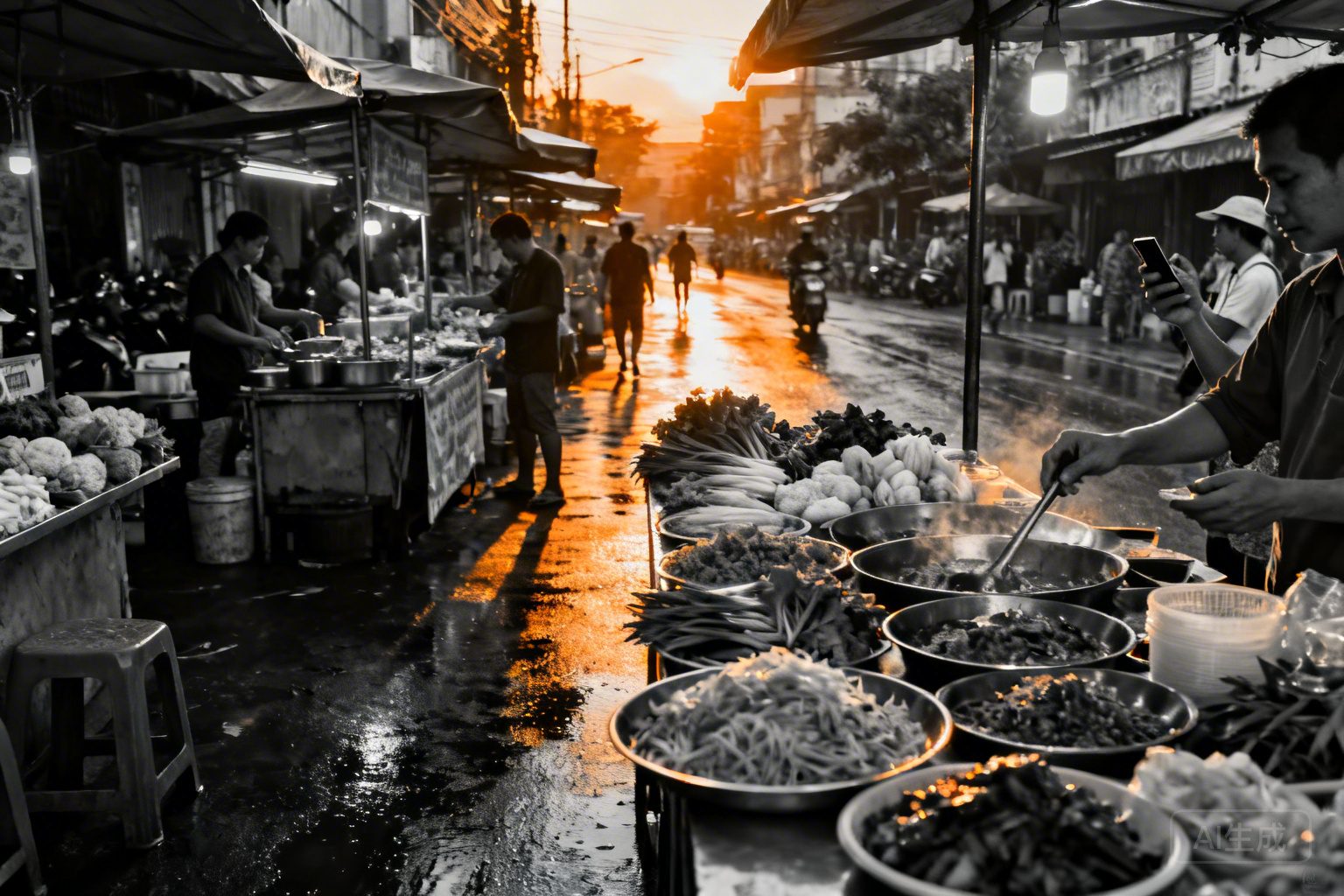
Most people go to Panjiayuan during the day to buy mass-produced “antiques.” But if you want the extraordinary, you show up at 4:30 AM on a Saturday. This is when the “Ghost Market” happens. Vendors from the provinces pull up in battered vans, flickering flashlights in hand, laying out things that look like they were dug out of a tomb yesterday. I once found a collection of handwritten diaries from the 1970s tucked under a pile of rusted Mao badges. I spent three hours haggling for a stone carving that I’m 60% sure is cursed.
The vibe here is quiet, urgent, and thick with cigarette smoke. To disappear here, bring a small flashlight and don’t act impressed by anything. The locals have this way of looking at an object—squinting, turning it over, tsk-ing—that tells the seller you know exactly what it’s worth. I met an old man there named Mr. Zhao who sold me a broken camera. He didn’t want the money as much as he wanted to explain the mechanical failure of the shutter for forty minutes. That’s Beijing: people will talk your ear off about the most mundane technical details if you show even a spark of genuine interest.