10 Reasons Why Busan is Even More Magical Than the Pictures!
The Blue Crescent: A Love Letter to the City of Salt and Neon
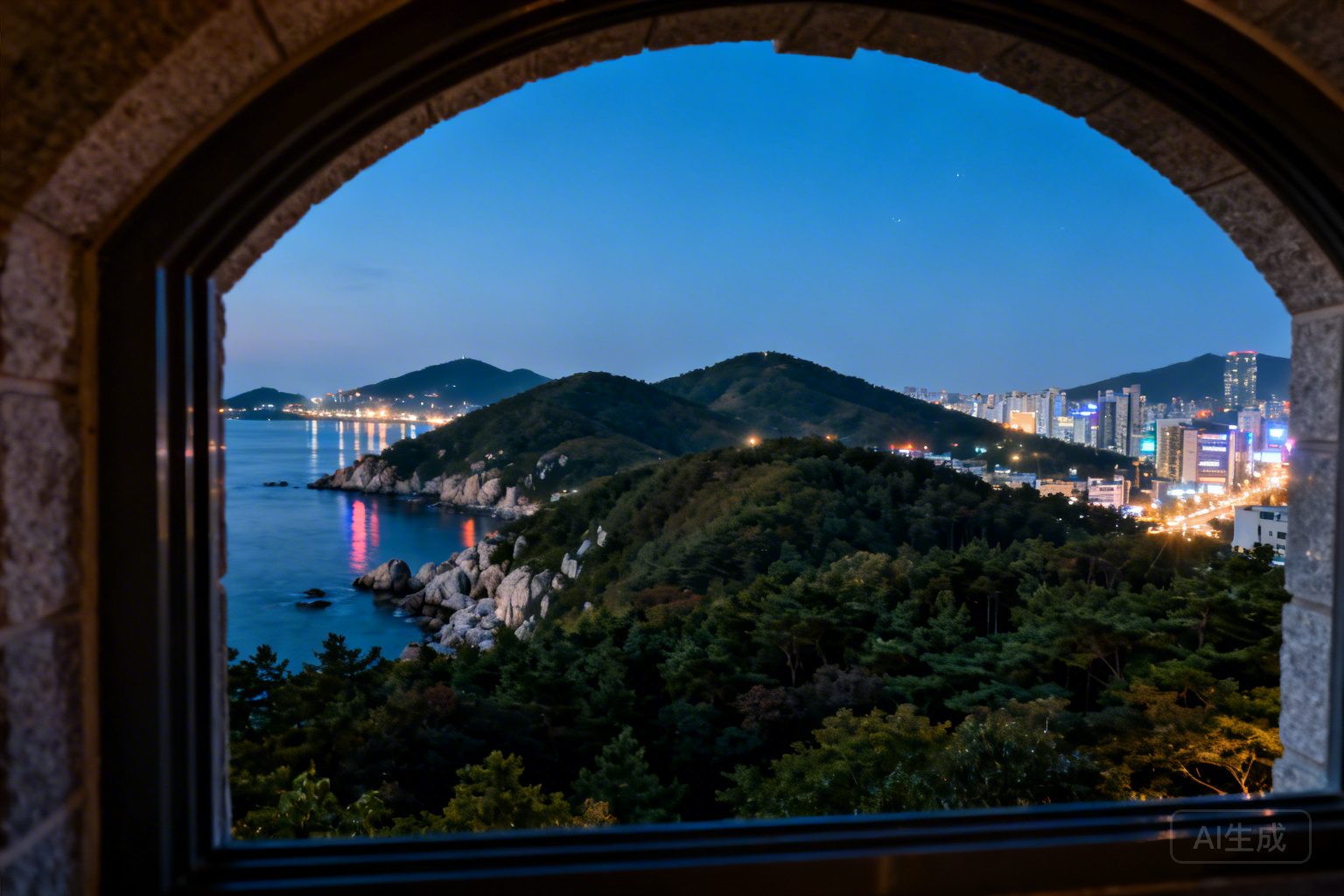
The train from Seoul arrives not with a whimper, but with a sudden, violent expansion of the horizon. You spend two and a half hours cocooned in the clinical, high-speed sterility of the KTX, watching the pleated green mountains of the peninsula flicker past like a faulty film reel. Then, the tunnel yields. The world breaks open into a jagged jigsaw of cobalt water and crane-studded industrialism. This is Busan. It does not possess the polished, manicured porcelain beauty of Seoul; instead, it is a city of rust, salt, and granite, clawing its way up the mountainsides as if trying to escape the very sea that feeds it.
I stepped onto the platform at Busan Station and was immediately hit by the air. It was heavy, weighted with the scent of drying squid and diesel, cooling the skin even as the humidity threatened to thicken the lungs. The pictures—those saturated Instagram squares of pastel houses—cannot capture the sheer verticality of this place. They cannot capture the way the wind whistles through the gaps in the corrugated iron roofs, or the way the light catches the scales of a hairtail fish on a bed of crushed ice. To understand why this city is more magical than the digital echoes suggest, one must lose their footing in its steep alleys.
1. The Verticality of History: Gamcheon’s Silent Echoes
In the popular imagination, Gamcheon Culture Village is the “Machu Picchu of Busan,” a Technicolor dreamscape of blue and yellow boxes. But stand there long enough, and the paint begins to peel back to reveal the bone. These houses weren’t built for aesthetic; they were built by refugees fleeing the Korean War, stacked on top of one another because the mountains were the only places left to hide. I traced my thumb over the edge of a 100-year-old door in a quiet cul-de-sac; the wood was silvered by age, the grain raised like the veins on an old man’s hand.
I watched an elderly woman, her back bent into a permanent question mark, hauling a bag of spring onions up a staircase so steep it felt like a ladder. She didn’t look at the murals of Le Petit Prince. She looked at the stone steps, each one worn smooth in the center by seventy years of survival. The magic here isn’t the color; it’s the defiance. It’s the way a whole civilization refused to slide into the sea.