Budget vs. Luxury: How to Master Windhoek on Any Checkbook!
The Ochre Dust and the Diamond Grit: A Tale of Two Windhoeks
The wind in Windhoek does not merely blow; it searches. It arrives from the Kalahari with the scent of parched thornbushes and ancient stone, funneling through the Khomasdal hills until it reaches the Independence Avenue pavement. Here, it whistles a sharp, high B-flat against the rusted wrought-iron balconies of German colonial buildings. It is a dry, persistent heat that catches in the back of your throat like fine-ground cinnamon. To land here is to step into a city of contradictions, a place where the shadow of a glass-walled skyscraper falls directly onto a sidewalk where a woman in a heavy, Victorian-era Herero dress—crimson fabric folded into the shape of cow horns—sells hand-carved soapstone figurines. This is a capital caught in a permanent state of becoming.
Whether you arrive with a tattered rucksack and a thumbed-out map or pull up to the porte-cochère of a hilltop sanctuary in a dust-streaked Land Rover, Windhoek demands a specific kind of attention. It is a city that hides its soul in the quiet corners between the glare of the midday sun and the bruised purple of the Highveld dusk. To master it, you must learn to navigate the friction between the budget and the boutique, the street-side fat-cake and the Wagyu tartare.
The Dawn Chorus: Street Coffee and Stone Spires
The morning begins with the sound of steel shutters rattling upward. In the Central Business District, the light is brutal and honest, highlighting the peeling turquoise paint on the doorframes of 100-year-old storefronts—layers of history flaking off like dead skin. I start my journey where the city’s heart beats loudest: Post Street Mall. The cries of the vendors are melodic, a rhythmic “A-re, a-re, a-re!” echoing off the walls, punctuated by the metallic clink of cheap jewelry being arranged on velvet trays. Here, the frantic office worker, clad in a crisp white shirt that seems impossibly bright against the grit, dodges a group of German tourists who are staring, open-mouthed, at the Gibeon Meteorites—ancient chunks of celestial iron bolted to plinths in the middle of the walkway.
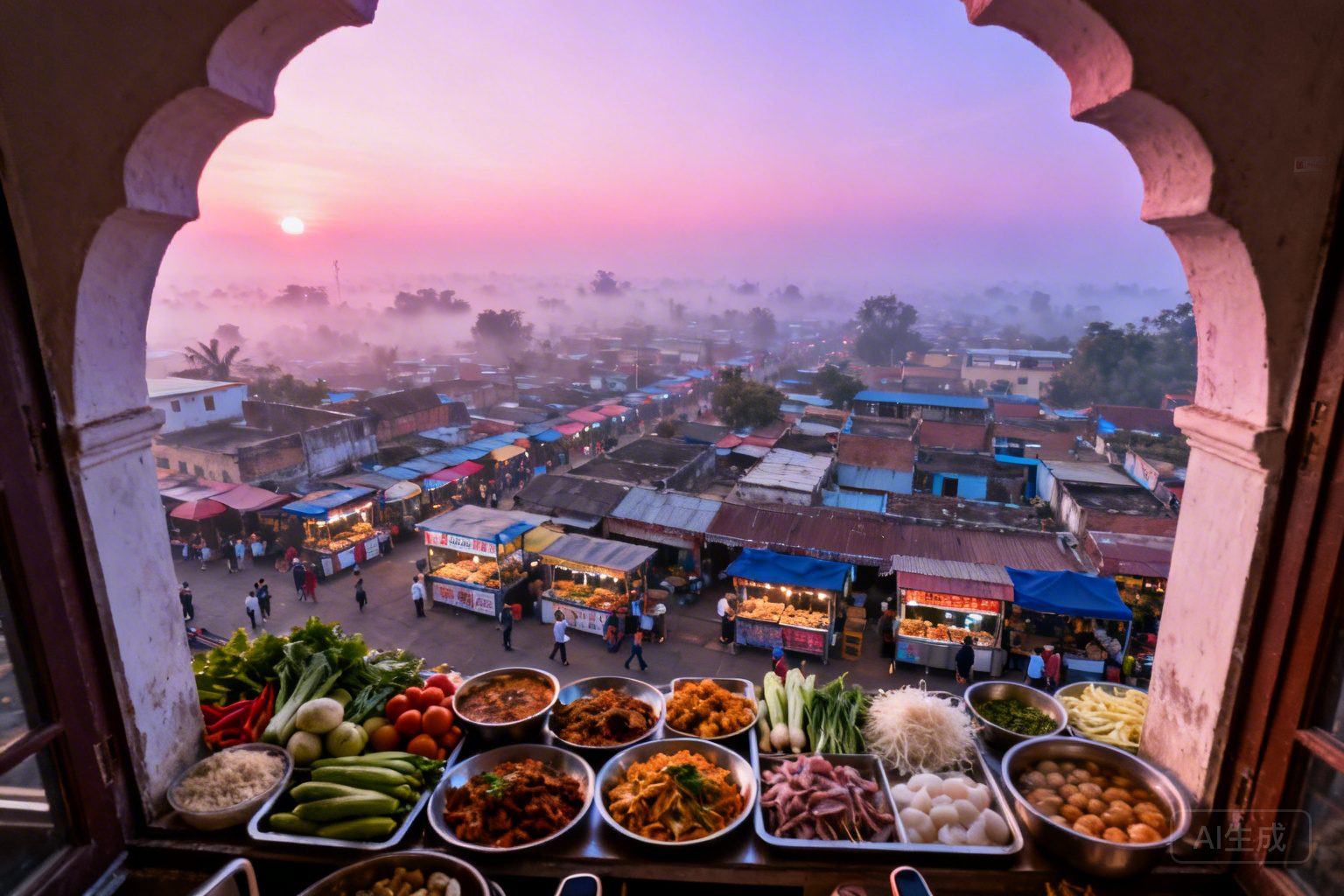
For the budget-conscious traveler, breakfast is a sensory immersion. Follow the scent of hot oil to a street stall near the bus terminal. For a handful of Namibian dollars, you receive a vetkoek—a deep-fried dough ball, heavy and warm, its surface pockmarked with bubbles of grease that shatter under the teeth. It is salty, comforting, and quintessentially Windhoek. You eat it standing up, watching the city wake. You see the brusque waiter at a nearby café, a man with skin the color of dark espresso and eyes that have seen too many seasons of drought, flicking a gray rag at a fly with the precision of a marksman.