Night Owl’s Guide: 10 Honolulu Landmarks That Look Magical After Dark!
The Neon Nocturne: Chasing Honolulu’s After-Hours Soul
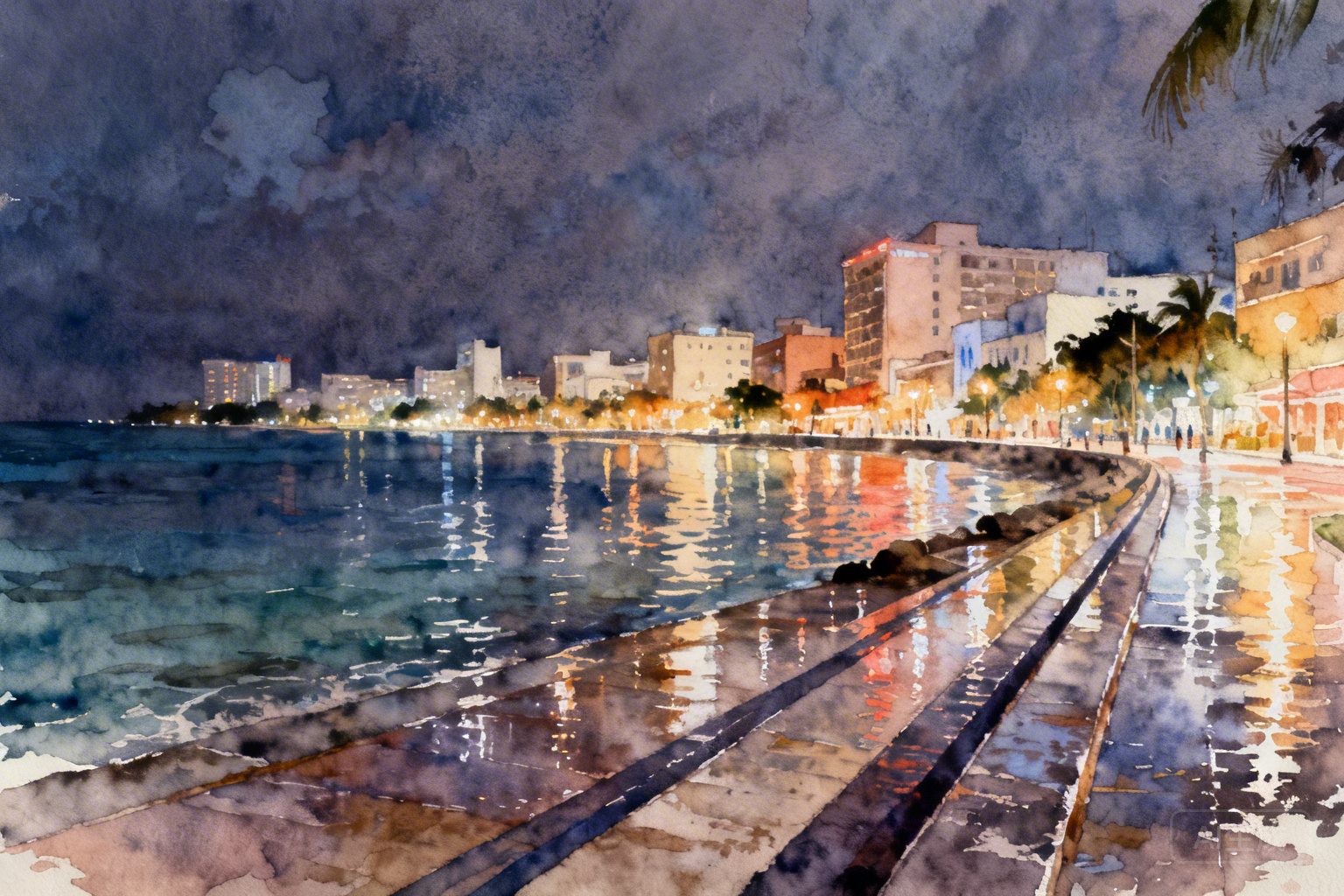
The Pacific sun does not set so much as it collapses, a bruised plum falling behind the jagged silhouette of the Waianae Range, leaving the air thick with the scent of salt spray and overripe ginger. In Honolulu, the transition from day to night is a physical weight. The humidity, once a heavy blanket, becomes a velvet glove. As the tourist masses retreat to their air-conditioned high-rises to nurse mai tai hangovers, a different city exhales. This is the Honolulu of the night owl—a landscape of flickering fluorescent tubes, shadows that stretch like ink across volcanic rock, and the rhythmic, metallic pulse of a city that refuses to sleep until the trade winds dictate otherwise.
To see this city after dark is to witness a grand, humid theater. It is a place where the architecture of the 19th-century monarchy brushes against the brutalist concrete of the 1970s, all of it softened by the forgiving glow of the moon. We begin our pilgrimage where the history is deepest, and the shadows are longest.
1. Iolani Palace: The Ghostly Grandeur of the Monarchy
Standing before the wrought-iron gates of Iolani Palace at 11:00 PM, you feel the temperature drop by exactly four degrees. It is not a meteorological fluke; it is the weight of history. The palace, the only royal residence on American soil, sits like a Victorian jewel box under the amber hum of the streetlights. The Corinthian columns don’t just hold up the lanai; they seem to vibrate with the tension of a kingdom lost. The white paint on the balustrades is too perfect, a stark contrast to the ancient banyan trees that flank the grounds—trees with aerial roots like the gnarled fingers of giants reaching for the soil.
I watched a security guard, a man whose skin was the color of polished koa wood and whose eyes held the weariness of a thousand graveyard shifts, pace the perimeter. He didn’t use a flashlight. He moved by muscle memory, his boots crunching on the gravel with a rhythm that felt like a heartbeat. When he passed the corner where Queen Liliʻuokalani was once imprisoned, he slowed his pace, a silent acknowledgment of the “mana”—the spiritual power—that locals insist still saturates the lime-and-brick walls. The wind here doesn’t whistle; it sighs through the leaves of the kukui trees, carrying the faint, impossible scent of expensive tobacco and pikai flowers.