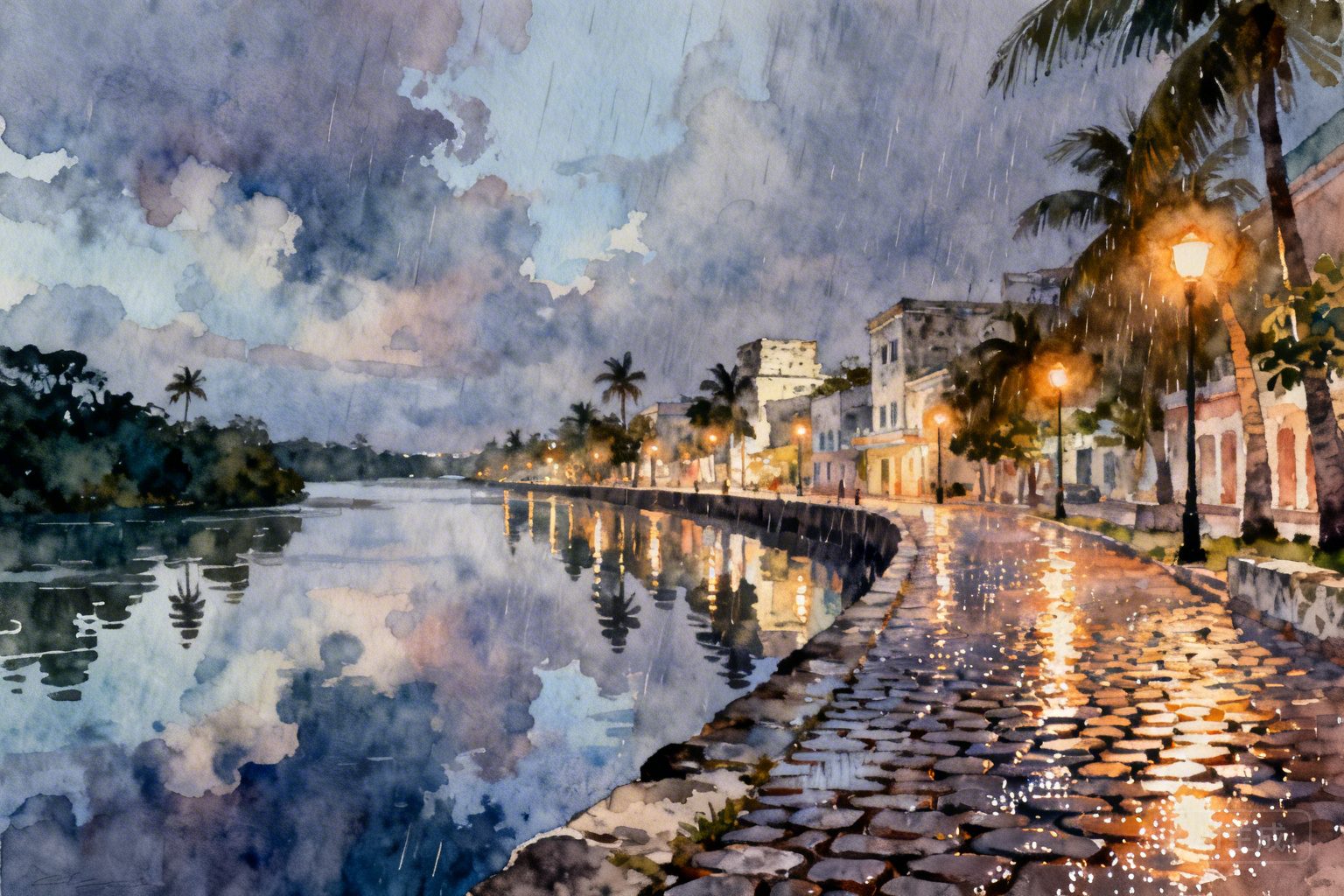
Night Owl’s Guide: 10 Salvador Landmarks That Look Magical After Dark!
The Humidity, the Axé, and the After-Hours Glow
I’ve been drifting through Salvador for six months now, and I’ve learned that this city has two distinct souls. The daytime version is a frantic, sweat-soaked scramble—a cacophony of street vendors shouting prices for coconut water and the relentless sun reflecting off the colonial pastels of the Pelourinho. But when the sun drops into the Bay of All Saints, the humidity stops feeling like a weight and starts feeling like a velvet cloak. The city softens. The tourists retreat to their air-conditioned hotels in Rio Vermelho, and the real Salvador—the Soteropolitano heart—begins to beat.
If you’re here to “disappear,” you have to stop looking at the map and start looking at the light. Salvador isn’t a city of straight lines; it’s a city of ladeiras (slopes) and hidden corners. To live here as a nomad is to accept that your Google Maps will fail you, your shoes will eventually be ruined by cobblestones, and the best experiences happen after 10:00 PM when the breeze finally kicks in. This isn’t a vacation guide. This is a manual for the night owls who want to blend into the shadows of the oldest capital in Brazil.
1. The Elevador Lacerda from the Bottom Up
Most people take the Elevador Lacerda during the day to get from the Comércio to the Praça da Sé. They stand in line, pay their few cents, and snap a photo of the bay. But at 11:00 PM, when the crowds have thinned, the elevator looks like a glowing Art Deco monolith against the dark cliffside.
The “magical” view isn’t from the top looking down; it’s from the bottom looking up. Stand in the Praça Cairu near the Mercado Modelo. The yellow floodlights hit the concrete tower, making it look like a rocket ship ready to launch into the stars. There’s a quietude here at night that is almost eerie. You’ll see the occasional fisherman packing up his gear and the street dogs reclaiming the pavement. It’s here I met “Seu” Jorge, a man who has sold peanuts near the elevator for thirty years. He told me that the elevator “breathes” at night. If you listen closely, the mechanical hum sounds like the city’s pulse.