The Best Time to Visit George Town: A Seasonal Guide to Avoiding the Crowds!
The Ghost of the Monsoon and the Gilded Cage
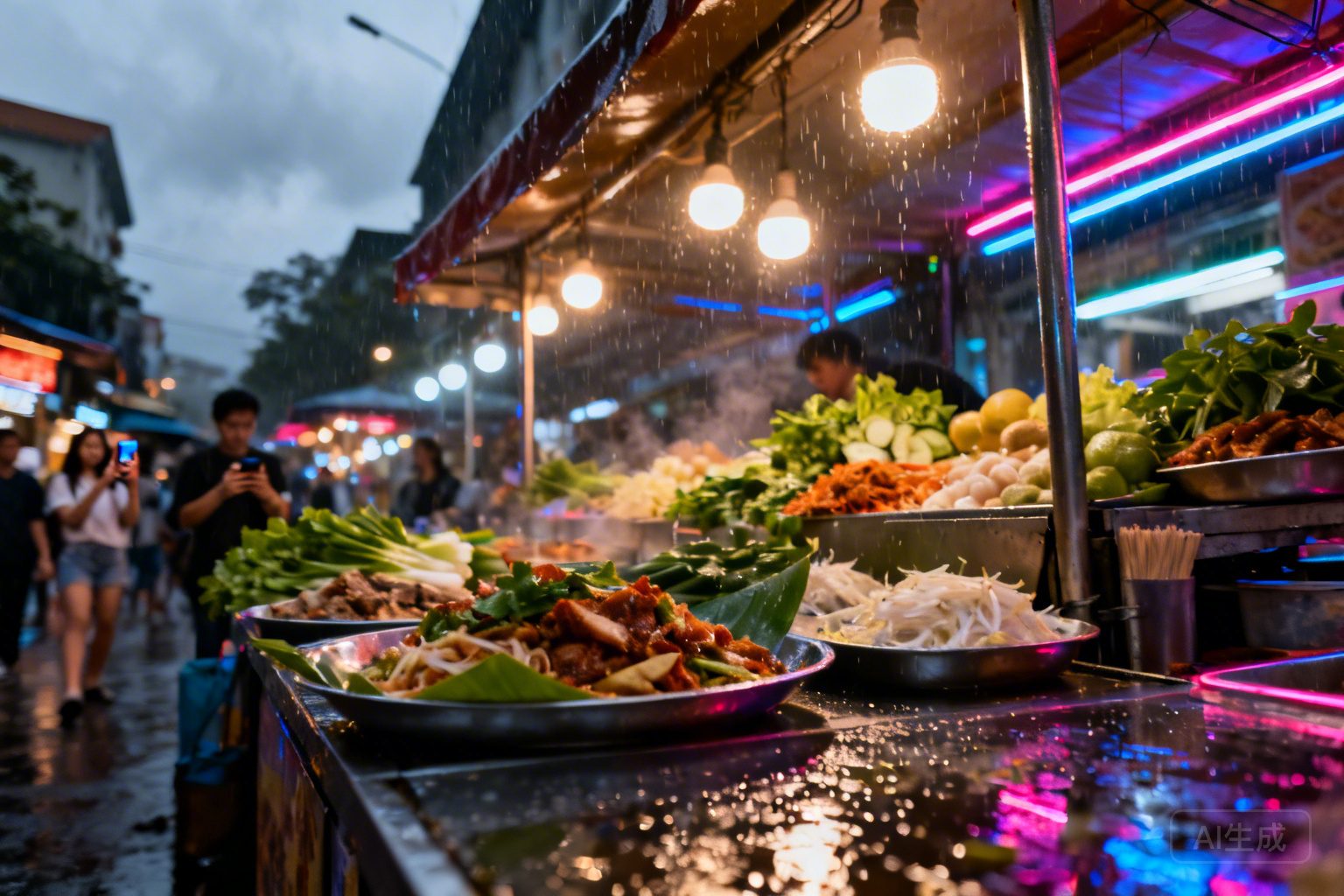
There is a specific frequency to the silence in George Town just before the sky breaks. It is not a lack of sound, but a compression of it. The humidity, thick enough to be carved with a dull pewter knife, sits heavy over the Straits of Malacca, pressing the scent of fermented shrimp paste and diesel fumes deep into the pores of the neoclassical masonry. At this precise moment, somewhere between the waning of the Northeast Monsoon and the predatory heat of April, the city exhales. This is not the George Town of the glossy brochures—the one saturated with the neon hues of Instagram-ready street art and the curated chaos of the night markets. This is the city in its pajamas, unguarded and visceral.
To understand the rhythm of this UNESCO-protected labyrinth, one must first discard the notion of a “perfect” season. In the travel industry’s lexicon, “best” is often a synonym for “comfortable.” But comfort is the enemy of the authentic traveler. If you seek the soul of Penang’s capital, you do not arrive when the weather is a stagnant blue. You arrive when the rain threatens to dissolve the very foundations of the shophouses, for it is only then that the crowds retreat, leaving the stage to the ghosts and the grinders.
I found myself standing at the corner of Lebuh Chulia and Love Lane at 4:30 AM, watching the bruised purple of the pre-dawn sky struggle against the flickering sodium lamps. The air tasted of wet stone and charcoal. A single motorbike sputtered in the distance, a mechanical cough that echoed off the lime-plastered walls. This is the window. The narrow, precarious sliver of time—roughly mid-September to early November—when the “inter-monsoon” period scares away the casual weekenders from Kuala Lumpur and the cruise ship battalions. The heat is tempered by sudden, violent outbursts of rain that turn the granite gutters into rushing rivulets, and the city, for a brief moment, belongs to those who inhabit its shadows.
The Architecture of Decay and Resilience
Walking through the core zone is an exercise in tactile history. I ran my hand along a set of folding wooden doors on Lebuh Armenian—the paint was not merely peeling; it was shedding its skin like a serpent, revealing layers of cerulean, ochre, and a deep, oxidized red that whispered of a century of salt-air erosion. The texture was gritty, a Braille map of the city’s economic fluctuations. These shophouses, with their five-foot ways (kaki lima), are designed for a climate that is perpetually hostile. They are narrow and deep, punctuated by internal courtyards that act as lungs, pulling the heavy air upward and out.